
ClinchClinch

Personal sales pipeline

Keep every active deal tied to a real next action.

Clinch gives individual sellers a focused pipeline: what needs attention now, what changed, and what may close over the next six months.

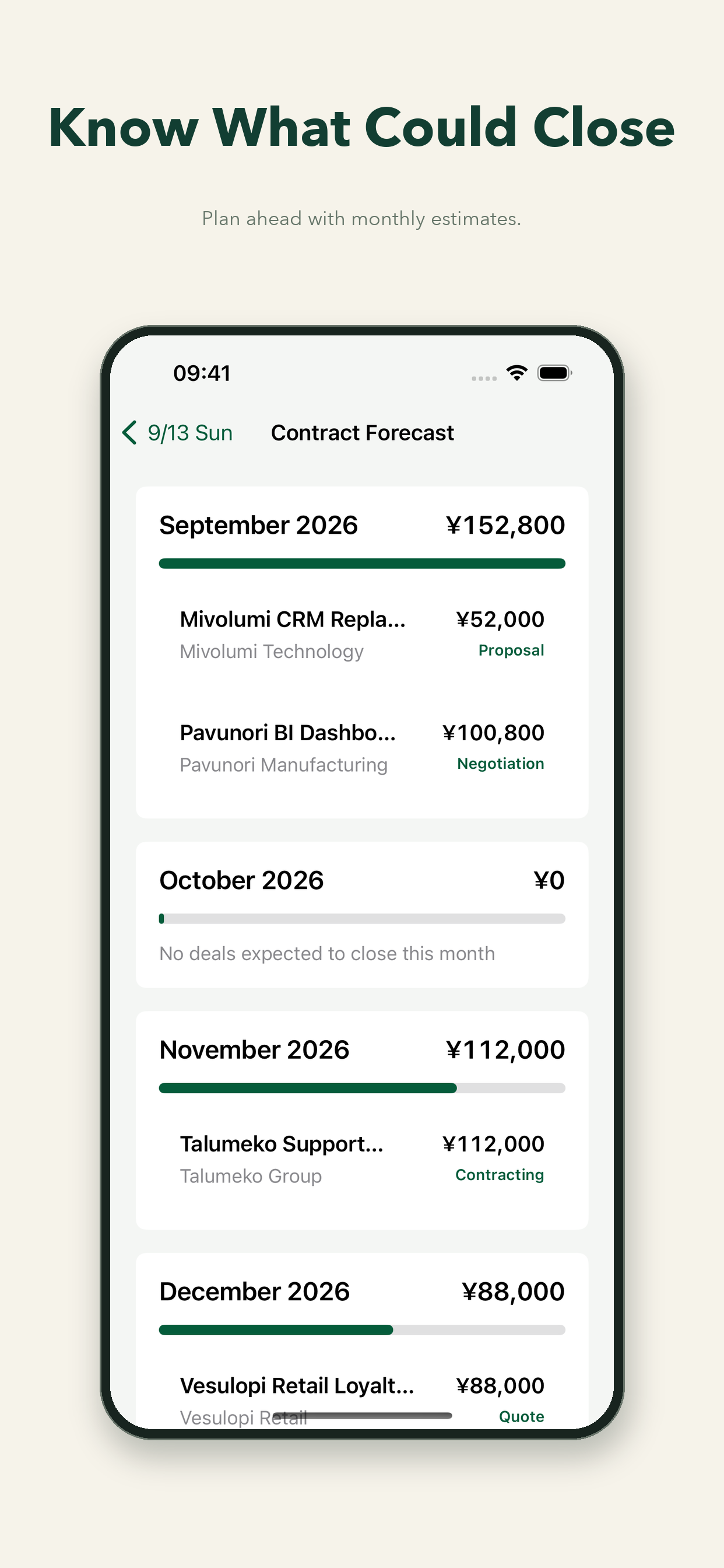
Clinch six month sales pipeline forecast

A pipeline is useful only when it changes what you do next.

Recent follow-ups

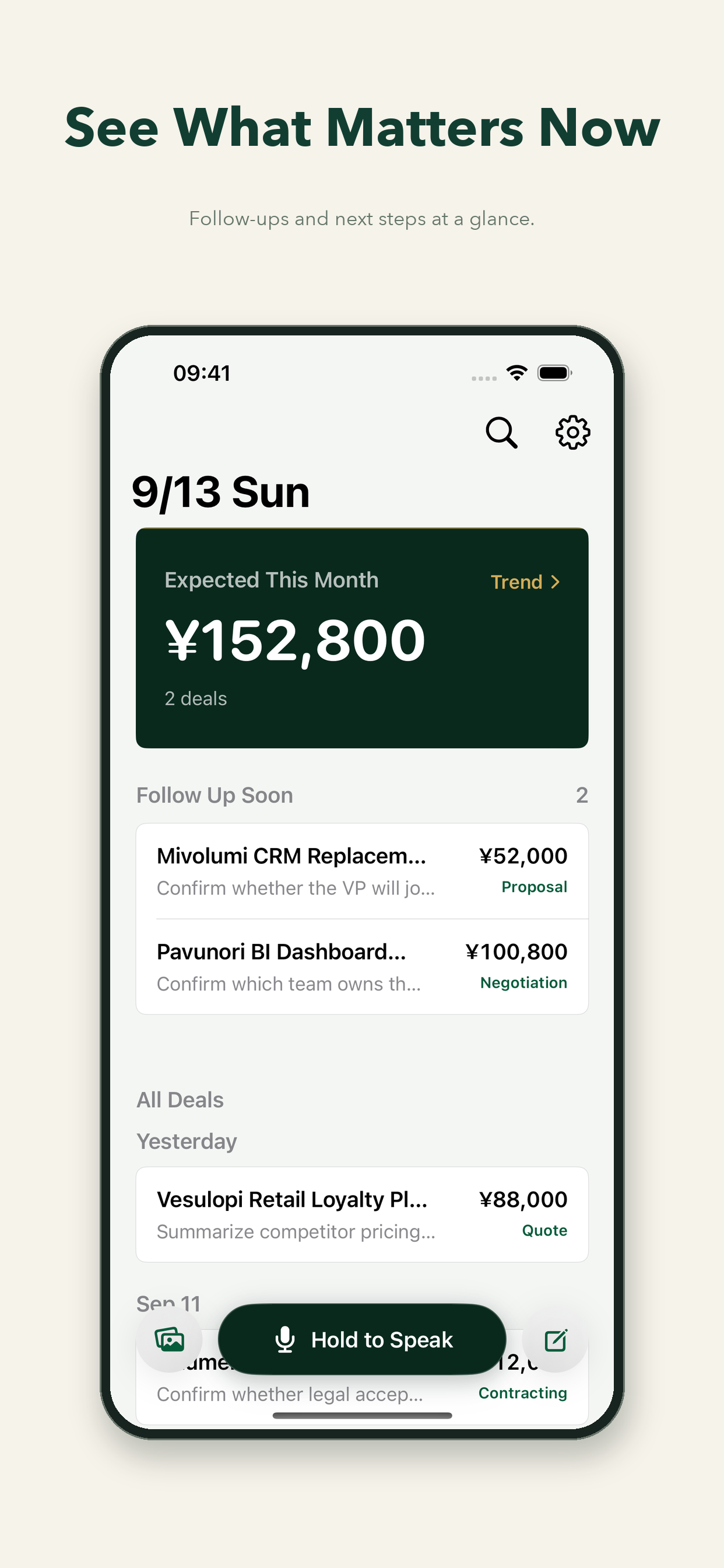
Active deals with a reminder time appear in next-action order; overdue follow-ups come first.

Consistent stages

Track stages the customer has reached, from initial contact and needs to proposal, quotation, optional bidding or negotiation, contracting, won, or lost.

Weighted forecast

Use amount and confidence to understand expected value without hiding the underlying assumptions.

A lighter alternative to maintaining a CRM for yourself

A solo seller, founder, consultant, or account executive may still use a company CRM. But personal preparation often happens somewhere else: notes, chat history, screenshots, and memory. Clinch brings those fragments into a private working view centered on the seller.

How the six-month forecast works

Active opportunities use an expected close month. Clinch groups them across the next six months and calculates weighted expected value from amount and confidence. Closed opportunities retain their actual close time. The forecast is an estimate, not a promise, and its inputs stay visible for correction.

What stays out of the way

Clinch 1.0 is not a manager dashboard, team workspace, commission calculator, or automatic message sender. Its scope is intentionally narrower: preserve customer context and help one seller make the next move.
Illustrative forecast

See the calculation behind the number.

Suppose a deal has an amount of ¥80,000, a confidence of 60%, and an expected close in November. Its weighted expected amount is ¥48,000 for that month. It is not a booking or a promise.

Deal amount¥80,000
Confidence60%
Weighted expected amount¥48,000

If amount or confidence is unknown, the weighted amount is zero until you add enough information. The deal itself remains visible.

Clinch home screen with recent follow-ups and all deals

Follow-up and forecast answer different questions.

The home screen asks, “Which customer needs attention next?” Recent follow-ups use the next-action time and exclude won or lost deals. The complete deal list stays in a stable creation-date order, so rescheduling does not make a deal disappear.

The forecast asks, “What might close in each of the next six calendar months?” It groups active deals by expected close month. Update a deal's amount, confidence, or timing and the estimate changes with it.

Frequently asked questions

What should a personal sales pipeline show?

It should keep active deals, their reached stages, amounts and confidence, expected close timing, and one primary next action easy to review.

How does Clinch calculate expected amount?

For each deal, the weighted amount is its amount multiplied by confidence. Missing amount or confidence contributes zero, rather than an invented estimate.

How far ahead does the forecast go?

It covers the current calendar month and the following five months, with deal details behind each monthly total.

Bring your next six months into focus.

Capture the facts, then see the pipeline take shape.

Explore Clinch