Understand the solution
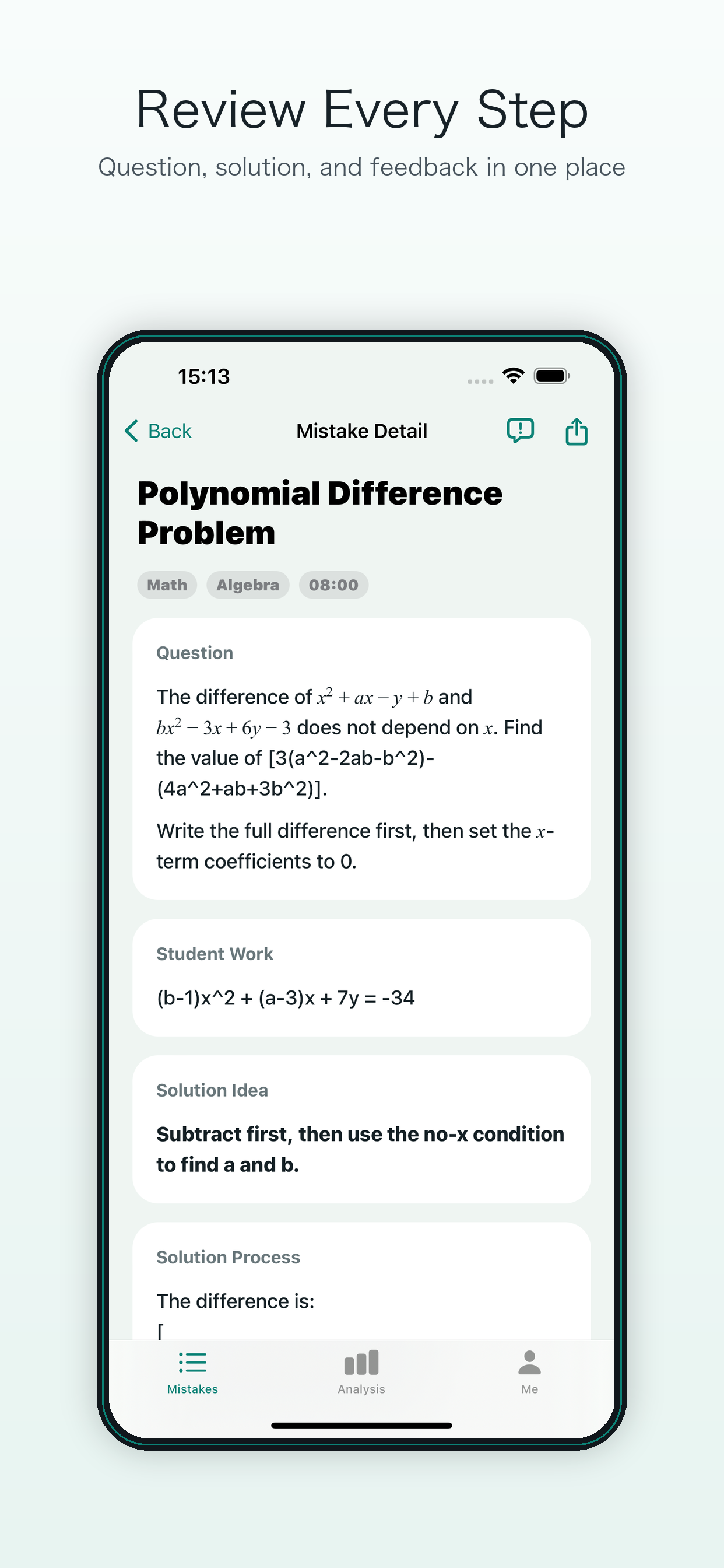
Compare the question, work, and steps to see what this problem tests.
Missed-question review guide
Reading the correct answer is only the start. Use this guide to retry a question, identify the first step that went wrong, record a useful takeaway, and check your understanding with another problem.
Use this after homework or a returned practice test. Work with materials you are allowed to keep, and check your teacher’s explanation when the answer is uncertain.
Cover the answer and attempt the question again. Mark where you get stuck. A question you guessed correctly can also be worth reviewing.
Compare your attempt with a checked solution. Was the issue a concept you did not understand, a calculation, a misread instruction, or applying the wrong method? Be more specific than “careless.”
Write a reminder you can apply to a new question. For example: “When distributing, multiply every term inside the parentheses.” Save the original question and your attempt so the reminder has context.
Choose a problem testing the same idea from your course materials or an available practice set. If you still need the solution, revisit the concept before adding more questions.
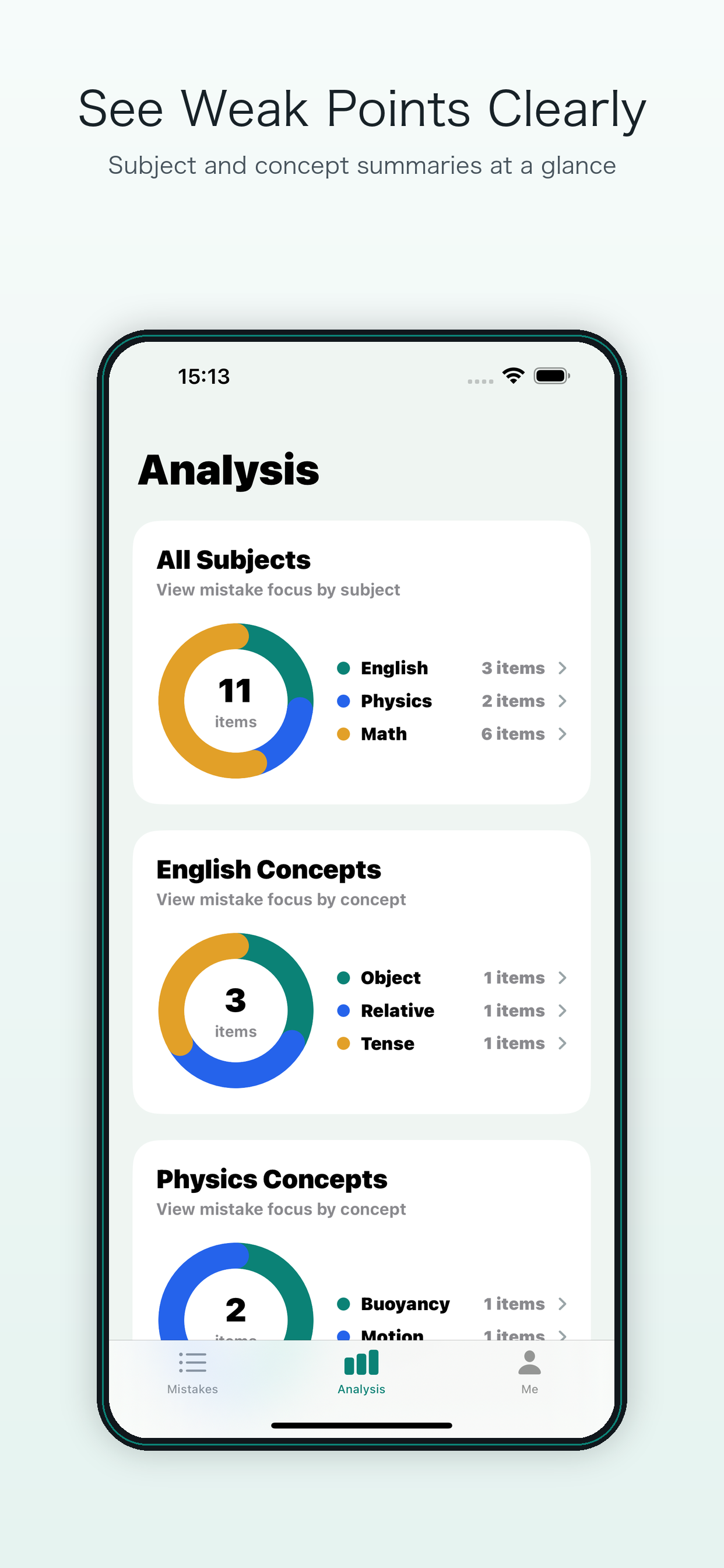
Return in a later study session and try again without the answer visible. Group repeated errors by topic to decide what to study next. Adjust your review timing to the difficulty and your test date; there is no universal schedule.
For 3(x + 2) = 18, the attempt 3x + 2 = 18 misses the multiplication of 2. The corrected line is 3x + 6 = 18, giving x = 4. A useful takeaway is “distribute to every term,” not “check more carefully.”
Now try 4(x + 3) = 28. Solve before checking: x = 4, since 4(4 + 3) = 28. This example illustrates the method; it is not a claim about an actual student’s results.
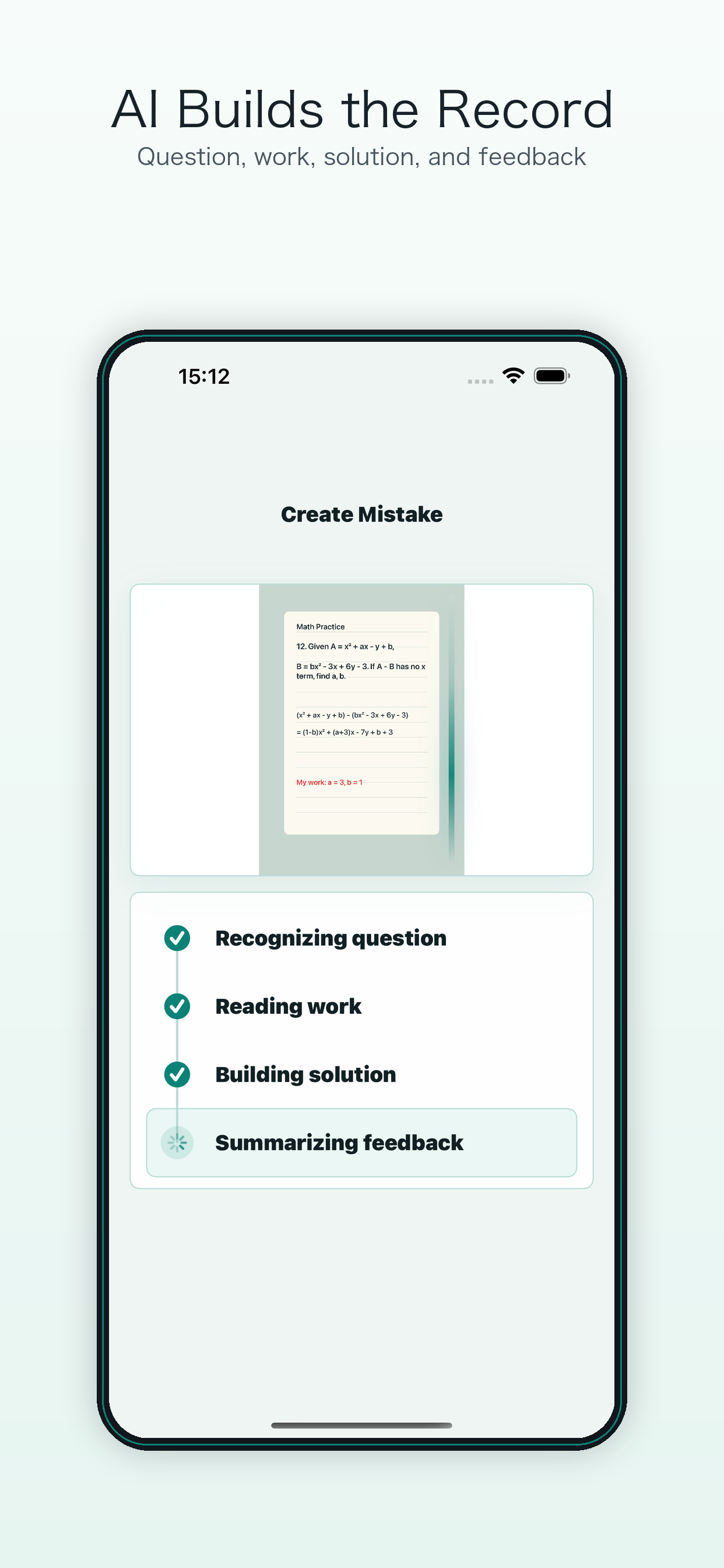
Open the free printable study mistake log for a worked example and blank entries. If you use Cardify, scan the question and keep the original work, explanation, and topic together. Review your saved questions before choosing the next practice task.
University learning resources recommend examining missed questions and finding error patterns. See Rhodes College’s exam-analysis guide and Kansas State’s post-test analysis worksheet. This guide adapts those general ideas into a practical workflow; it does not promise a particular score improvement.
Three review steps
Saying “I get it” does not always mean mastery. Give each return to a mistake a clear purpose and use practice to check understanding.
Compare the question, work, and steps to see what this problem tests.
Was it reading, a formula, a step, or calculation?
Work on the related topic to check independent understanding.
From explanation to verification
An explanation can feel reasonable while the student still cannot rebuild the thinking independently. Revisiting feedback and focused practice moves review beyond reading.
Before looking at the answer, name the concept or method behind the question.
Identify the exact step that caused the mistake instead of writing only “careless.”
Try related practice to check whether the student can work independently.
Real flow
FAQ
No. Recall your own reasoning first, review the feedback, and then try related practice to check understanding.
Understanding one solution may not transfer to a similar question. Focused practice helps test the underlying weak point.
Explore